
Post-Diwali Air Pollution: Safety Tips for CPAP, BiPAP and Oxygen Concentrator Users
November 9, 2026 2026-11-09 2:58Post-Diwali Air Pollution: Safety Tips for CPAP, BiPAP and Oxygen Concentrator Users
 N V Medical
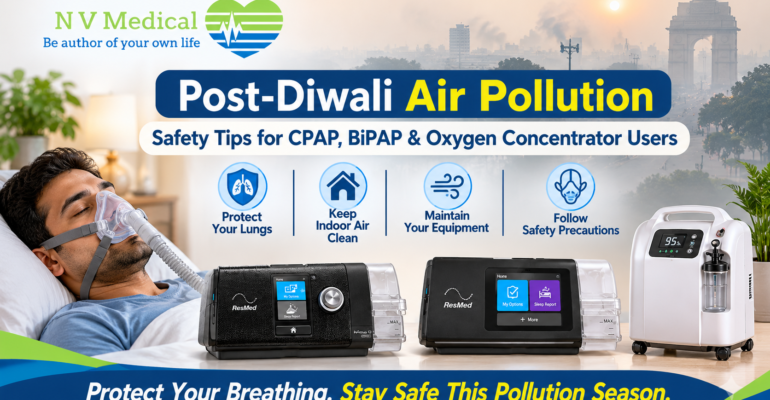
Post-Diwali Air Pollution: Safety Tips for CPAP, BiPAP and Oxygen Concentrator Users
The celebrations of Diwali may be over, but the impact of air pollution can continue for days or even weeks after the festival.
For people living with respiratory conditions, sleep apnea, asthma, COPD and other lung or heart-related problems, polluted air can make breathing more difficult and may worsen existing symptoms.
Patients who use CPAP machines, BiPAP machines and oxygen concentrators at home should take additional precautions during periods of poor air quality.
In this guide, N V Medical explains how post-Diwali pollution can affect respiratory health, how to maintain your medical equipment and what precautions patients and caregivers should follow.
1. Why Does Air Pollution Remain a Concern After Diwali?
Air pollution may persist for several days after Diwali.
Firecracker smoke, dust, vehicle emissions, construction work and other pollution sources can continue to worsen air quality in the days that follow.
Winter weather conditions may also cause pollutants to build up near the ground.
Fine particles, especially PM2.5, can penetrate deep into the respiratory system and worsen existing breathing difficulties..
People who may be particularly vulnerable include:
- Patients with asthma and COPD.
- People diagnosed with obstructive sleep apnea.
- Patients using CPAP or BiPAP machines.
- People receiving prescribed oxygen therapy.
- Elderly individuals with respiratory or cardiac conditions.
- Patients recovering from respiratory infections.
Common symptoms associated with exposure to polluted air may include coughing, throat irritation, wheezing, chest tightness and breathlessness.
2. General Precautions for Respiratory Patients During Poor Air Quality
Whether you use a CPAP machine, BiPAP machine or oxygen concentrator, taking a few precautions can help reduce exposure to polluted air.
Stay Indoors When Pollution Levels Are High
Limit unnecessary outdoor activity when the AQI reports poor, very poor, or severe air quality.
People with pre-existing respiratory conditions should take particular care during periods of heavy pollution.
Monitor the Air Quality Index (AQI)
Regularly check the air quality in your area.
Residents of Delhi NCR can track pollution levels using the Central Pollution Control Board (CPCB) air quality monitoring portal.
Consult local AQI readings when planning outdoor activities, and follow your doctor’s advice.
Maintain Cleaner Indoor Air
Consider using a properly sized HEPA air purifier in the room where the patient spends most of their time.
Replace or clean its filters according to the manufacturer’s instructions.
Avoid indoor smoking, incense sticks, dhoop and other sources of smoke, as these can further affect indoor air quality.
Keep Windows Closed During Heavy Pollution
During periods of intense outdoor pollution, keep windows and doors closed where practical.
Ventilate the room when outdoor air quality improves, while maintaining adequate ventilation for medical equipment.
Avoid Strenuous Outdoor Exercise
Avoid jogging, cycling and strenuous physical activity outdoors during periods of poor air quality.
Follow your healthcare professional’s advice regarding physical activity and respiratory care.
3. CPAP Machine Users: Precautions During Post-Diwali Pollution
CPAP (continuous positive airway pressure) machines are frequently prescribed to people with obstructive sleep apnea.
They deliver pressurised air through a mask to help keep the airway open while the user sleeps.
During periods of elevated pollution, CPAP users should take particular care to keep their equipment clean and position it appropriately.
Important Precautions for CPAP Users
1. Keep your CPAP machine in a clean location
Place the machine on a clean, dry and stable surface, away from open windows and areas exposed to dust and smoke.
2. Check the CPAP air filter
Inspect the machine’s air filter regularly.
Clean or replace it according to the manufacturer’s instructions. A dirty, damaged or blocked filter may affect machine performance.
3. Clean your mask and tubing
Maintain your CPAP mask, tubing and humidifier chamber according to the recommended cleaning schedule.
Ensure washable components are properly dried before reassembly.
4. Do not modify the machine’s air intake
Never attach cotton, tissue paper, cloth or homemade filters to the CPAP air inlet.
These materials may obstruct airflow and affect the proper functioning of the device.
5. Continue prescribed CPAP therapy
Do not stop CPAP treatment simply because outdoor pollution levels are high.
If you experience unusual discomfort, breathing difficulties or worsening symptoms, consult your healthcare professional.
4. BiPAP Machine Users: How to Stay Safe During Pollution
BiPAP (Bilevel Positive Airway Pressure) machines provide different pressure levels during inhalation and exhalation.
They may be prescribed for patients with certain respiratory conditions who require breathing support.
For patients who depend on BiPAP therapy, maintaining the prescribed treatment and ensuring proper equipment functioning is particularly important.
Important Precautions for BiPAP Users
1. Keep the machine away from dust and smoke
Place your BiPAP machine in a clean indoor location, away from windows and balconies exposed to pollution.
2. Inspect the air filter regularly
Check the filter and follow the manufacturer’s cleaning and replacement instructions.
Never use damaged or unsuitable filters.
3. Maintain your mask and tubing
Clean your mask, headgear and tubing according to the equipment manufacturer’s instructions.
4. Never change prescribed pressure settings yourself
Do not increase or decrease BiPAP pressure settings because of pollution-related breathing discomfort.
Any change in settings must be made under medical supervision.
5. Make arrangements for uninterrupted therapy
If your BiPAP machine is essential for respiratory support, discuss a suitable power backup arrangement with your equipment provider and healthcare professional.
If the machine stops working or breathing difficulties increase, seek medical assistance promptly.
5. Oxygen Concentrator Users: Important Precautions During Air Pollution
Oxygen concentrators are used to provide supplemental oxygen to patients who have been prescribed oxygen therapy.
Unlike oxygen cylinders, oxygen concentrators draw in surrounding air, process it and deliver concentrated oxygen to the patient.
Therefore, proper placement, ventilation and equipment maintenance are particularly important during periods of heavy dust and pollution.
Important Precautions for Oxygen Concentrator Users
1. Place the concentrator in a clean, well-ventilated room
Keep the machine away from direct exposure to smoke, dust and outdoor pollution.
Follow the manufacturer’s recommended clearance around the equipment.
2. Keep the air inlet and ventilation openings unobstructed
An oxygen concentrator requires sufficient surrounding air to operate properly.
Never cover the air intake or ventilation openings with cloth, plastic or other materials.
3. Check the filters regularly
Inspect the filters according to the manufacturer’s maintenance instructions.
Clean or replace them as recommended.
4. Do not change the prescribed oxygen flow rate
Never increase or decrease oxygen flow on your own because of pollution or breathlessness.
Continue the oxygen therapy prescribed by your doctor and seek medical advice if your symptoms worsen.
5. Follow oxygen fire safety precautions
Oxygen supports combustion and can make fires burn much faster.
Always remember:
- Never smoke near oxygen equipment.
- Keep oxygen concentrators away from candles, diyas and open flames.
- Never burst firecrackers near oxygen equipment.
- Avoid flammable sprays and oil-based products near oxygen equipment.
- Keep electrical connections safe and follow the manufacturer’s safety instructions.
Important: Do not interrupt prescribed oxygen therapy because of outdoor pollution. Follow your doctor’s instructions.
6. Can an Air Purifier Help CPAP, BiPAP and Oxygen Concentrator Patients?
An appropriately sized air purifier with a HEPA filter may help reduce airborne particulate matter inside a room.
It can be useful for people who spend extended periods indoors due to respiratory conditions.
Before selecting an air purifier, consider the following:
- Choose a model suitable for your room size.
- Check its clean air delivery rate (CADR).
- Replace filters according to the manufacturer’s instructions.
- Avoid air purifiers that intentionally generate ozone.
- Position the purifier without blocking the ventilation of medical equipment.
Remember that an air purifier does not remove every air pollutant and cannot completely eliminate the health risks associated with poor outdoor air quality.
It should be considered an additional precaution, not a replacement for prescribed respiratory treatment.
7. Warning Signs That Respiratory Patients Should Not Ignore
During periods of poor air quality, patients using CPAP, BiPAP and oxygen concentrators should pay attention to changes in their breathing.
Watch for:
- Increased breathlessness.
- Persistent coughing.
- Wheezing or chest tightness.
- Unusual difficulty breathing during sleep.
- Oxygen saturation readings below the patient’s prescribed target range.
- Increasing difficulty tolerating prescribed respiratory therapy.
If symptoms worsen, contact your treating doctor promptly.
Seek emergency medical attention if you experience severe breathlessness, chest pain, confusion, bluish lips or face, fainting or other signs of serious deterioration.
Do not attempt to change your oxygen flow or machine pressure settings without medical advice.
8. How N V Medical Supports Patients Requiring Respiratory Equipment
At N V Medical, we understand how important reliable respiratory equipment is for patients who require breathing support at home.
We offer medical equipment solutions, including:
- CPAP machines for sleep apnea therapy.
- BiPAP machines for prescribed respiratory support.
- Oxygen concentrators for patients requiring supplemental oxygen.
- Medical equipment on rent and for purchase.
- Guidance regarding equipment operation and maintenance.
Whether you need a CPAP machine, BiPAP machine or oxygen concentrator, our team can help you enquire about available equipment options.
We serve customers across Delhi NCR, including Ghaziabad and Noida.
For medical equipment enquiries and assistance, visit:
Website: https://www.nvmedical.in/
Phone/WhatsApp: Contact our team through the website.
Conclusion: Protect Your Breathing During the Pollution Season
The impact of Diwali pollution can continue even after the celebrations have ended. For people using CPAP machines, BiPAP machines and oxygen concentrators, taking additional precautions during the winter pollution season can help support safer respiratory care.
Keep your equipment clean, monitor air quality, reduce exposure to polluted air and continue your prescribed therapy.
Most importantly, consult your doctor if you experience worsening breathing symptoms.
At N V Medical, we believe that better respiratory care starts with the right equipment, proper maintenance and informed awareness.
Stay safe, protect your breathing and take care of your health throughout the pollution season.
Medical Disclaimer: This article is intended for general educational awareness and is not a substitute for professional medical advice, diagnosis or treatment. Always follow your treating doctor’s instructions and the manufacturer’s user manual for your specific medical equipment.